
You finally booked the trip. Bags packed, flights confirmed, out-of-office on. Then it hits you: who’s going to water the tomatoes?
If you’ve ever come home to crispy basil and a sad, drooping fern, you already know the heartbreak. Figuring out how to water plants while on vacation is one of those small worries that can nag at you the whole time you’re gone — and it shouldn’t be.
The good news? You don’t need a neighbor with a key, a complicated timer, or a wall of plastic bottles balanced over your pots. A self-watering planter does the job for you, quietly, while you’re sipping something cold on a beach.
Let’s walk through exactly how to keep plants alive while away — and why a water reservoir planter beats every DIY trick you’ve tried before.
The Real Reason Plants Die While You’re Gone
It’s almost never neglect. It’s timing.
Plants don’t drink on a human schedule. A hot afternoon can dry out a small pot in hours. A cool, cloudy stretch means the soil stays damp for days. When you’re home, you adjust without thinking — a splash here, a skip there.
When you’re away, all that guesswork stops. Either someone over-waters and drowns the roots, or the pot bakes dry and your plants give up. That’s the trap. And it’s exactly the problem an automatic watering for plants system is built to solve.
How Self-Watering Works
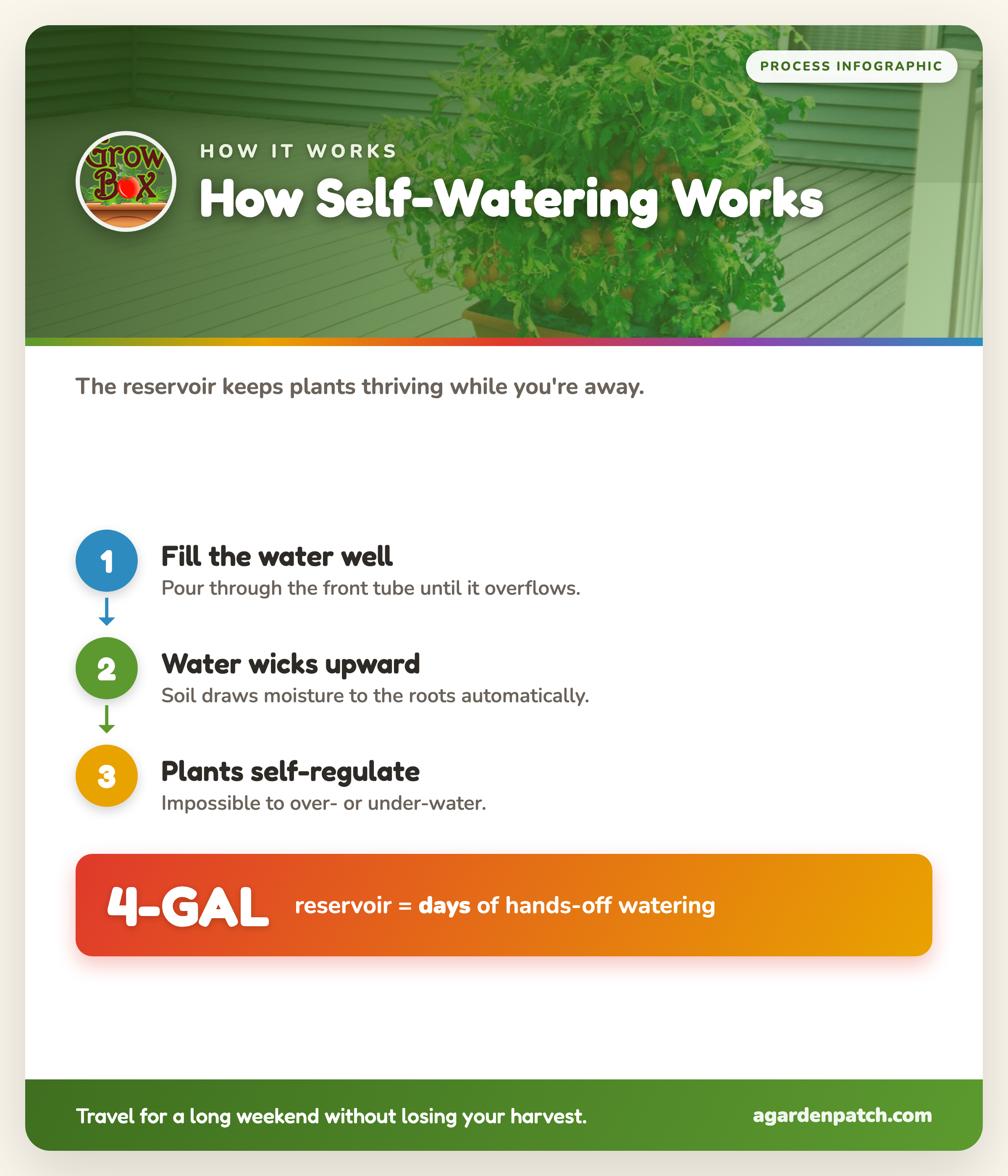
Here’s the part that surprises people: there’s no electricity, no app, no timer. A self-watering container how it works explanation comes down to three simple steps.
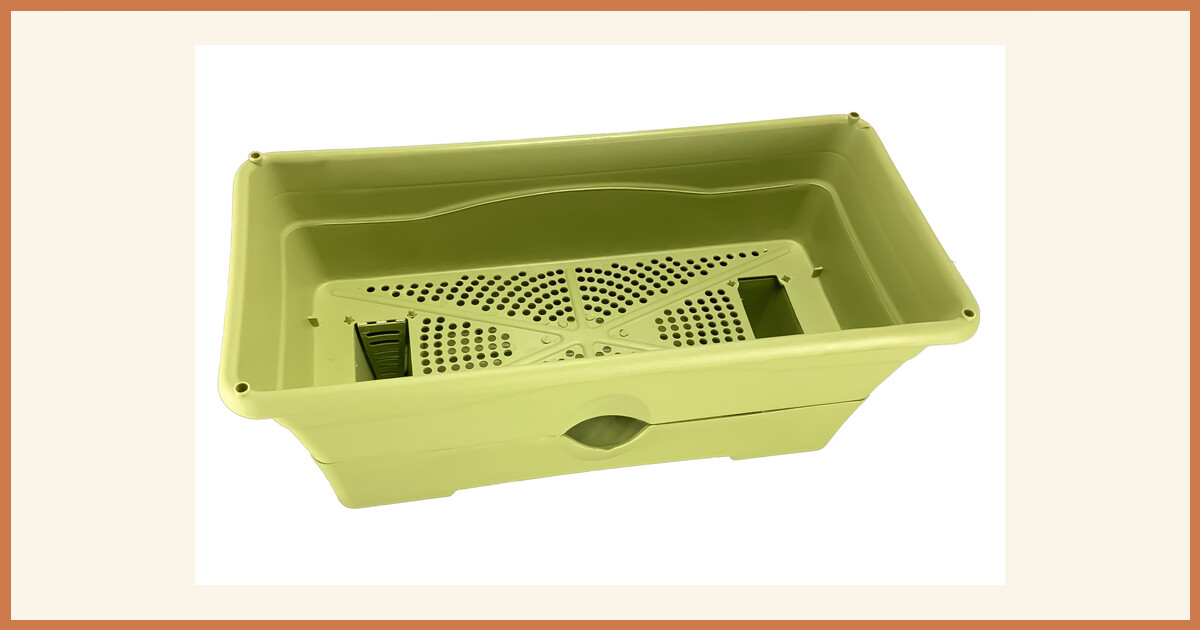
- Fill the water well. You pour water through a tube on the front of the GrowBox™ into a sealed 4-gallon reservoir in the base. That’s your supply — set it and forget it.
- Water wicks up to the roots. Soil naturally pulls moisture upward from the reservoir, like a paper towel touching a spill. The roots get a steady drink from below, right where they need it.
- Plants self-regulate. This is the magic. Plants take only the water they need, when they need it. On a scorching day they sip more. On a cool one, less. You can’t over-water or under-water them — the system simply matches their thirst.
That’s the whole mechanism. No moving parts to break, no schedule to program. Just steady moisture, on the plant’s terms.
How Long Does One Fill Last? The 4-Gallon Reservoir
This is the question that matters most before a trip.
A full 4-gallon water reservoir planter often carries plants comfortably through a long weekend — and frequently longer. Many people fill up, leave on a Friday, and come home Monday to plants that look exactly as healthy as when they left.
How far one fill stretches depends on a few honest variables:
- Plant size. A big, fruiting tomato drinks far more than a pot of lettuce.
- Heat. A 95-degree heat wave pulls water faster than mild spring weather.
- Sun exposure. Full blazing sun increases demand; partial shade slows it down.
So while one fill can last up to a week or more for smaller plants in mild conditions, a thirsty plant in a heat wave will go through it faster. The Nutrient Patch™ cover helps here too — it reduces evaporation off the soil surface, so more of your water goes to the roots instead of the air.
The takeaway: top off the reservoir right before you leave, and most home gardeners are covered for a typical getaway.
Prep Your Garden Before a Trip
A little setup goes a long way. Run through this quick checklist before you head out the door:
- Top off the reservoir. Fill it completely the morning you leave — not the day before. Start your trip with a full tank.
- Mulch or cover the soil. Use the Nutrient Patch™ cover to lock in moisture, block weeds, and steady the soil temperature while you’re gone.
- Move to partial shade in heat waves. Because the GrowBox™ is portable, you can slide it out of brutal afternoon sun. Less heat means less water used.
- Harvest ripe produce first. Pick anything ready to go. Ripe fruit left on the plant draws water and may spoil before you’re back.
Five minutes of prep, and your garden runs itself.
Self-Watering Planter vs. DIY Methods
You’ve probably seen the hacks. Some sort of work. None are as reliable as a real reservoir.
The wick-in-a-bucket trick. A string runs from a water bucket into the soil. It can work — until the wick dries out, slips loose, or simply can’t keep up with a thirsty plant. One failure point, and it’s done.
Upside-down bottles. You jam a water bottle into the soil and hope it drips at the right pace. In practice, it either dumps everything in an hour or clogs and delivers nothing. No real control.
Hose timers. These can deliver water, but they’re rigid. They water on a clock, not on demand — so they’ll soak your plants in the rain and skip them when it’s hot. They also need hookups, batteries, and troubleshooting when a fitting leaks across your patio.
Here’s why a self-watering planter wins: the reservoir doesn’t guess. It holds a real supply of water and lets the plant decide. No dripping math, no clock to fight the weather, no single string to fail. It’s the difference between hoping and knowing.
And unlike a one-trip bottle hack, the GrowBox™ is reusable season after season — indoors or out, for travelers, busy people, and anyone who’s ever killed a plant by forgetting to water.
Leave Without the Guilt
Knowing how to water plants while on vacation shouldn’t require a science degree or a favor from the neighbors. Fill the reservoir, cover the soil, and go. Your plants will be drinking on their own schedule the whole time you’re gone.
Ready to vacation-proof your garden for good? Get your GrowBox™ at agardenpatch.com and take your next trip without a second thought about the tomatoes.
Save This: How Self-Watering Works