
No yard? No problem. Balcony vegetable gardening is the easiest way to grow real, fresh food when all you have is a slab of concrete, a railing, and a little sunshine.
You don’t need a backyard. You don’t need raised beds or a tiller or a single bag of topsoil dumped in your living room. With the right setup, that narrow balcony or sunny patio corner can hand you ripe cherry tomatoes, crisp lettuce, and fistfuls of herbs all season long.
This guide walks you through everything: what to grow, how to grow up instead of out, and the small-space tricks that make balcony vegetable gardening work even if you’ve never kept a plant alive before.
Let’s turn that empty corner into a tiny farm.
Why Balcony Vegetable Gardening Just Works
Here’s the thing nobody tells beginners: small spaces are actually easier to garden than big ones.
A balcony or patio is contained. You can reach everything. You can watch your plants every day without trekking across a yard. And because you’re working with containers instead of the ground, you skip the hardest parts of traditional gardening entirely — no digging, no weeding a 20-foot row, no fighting clay soil.
Small space container gardening also gives you control. You decide the soil. You decide where the planter sits. And when the sun moves with the seasons, you move the garden right along with it.
The only real challenge is space. So the whole game becomes using what little you have as smartly as possible.
Small-Space Garden Checklist
Before you plant anything, make sure your spot checks these boxes. This is the short list that makes or breaks a balcony garden:
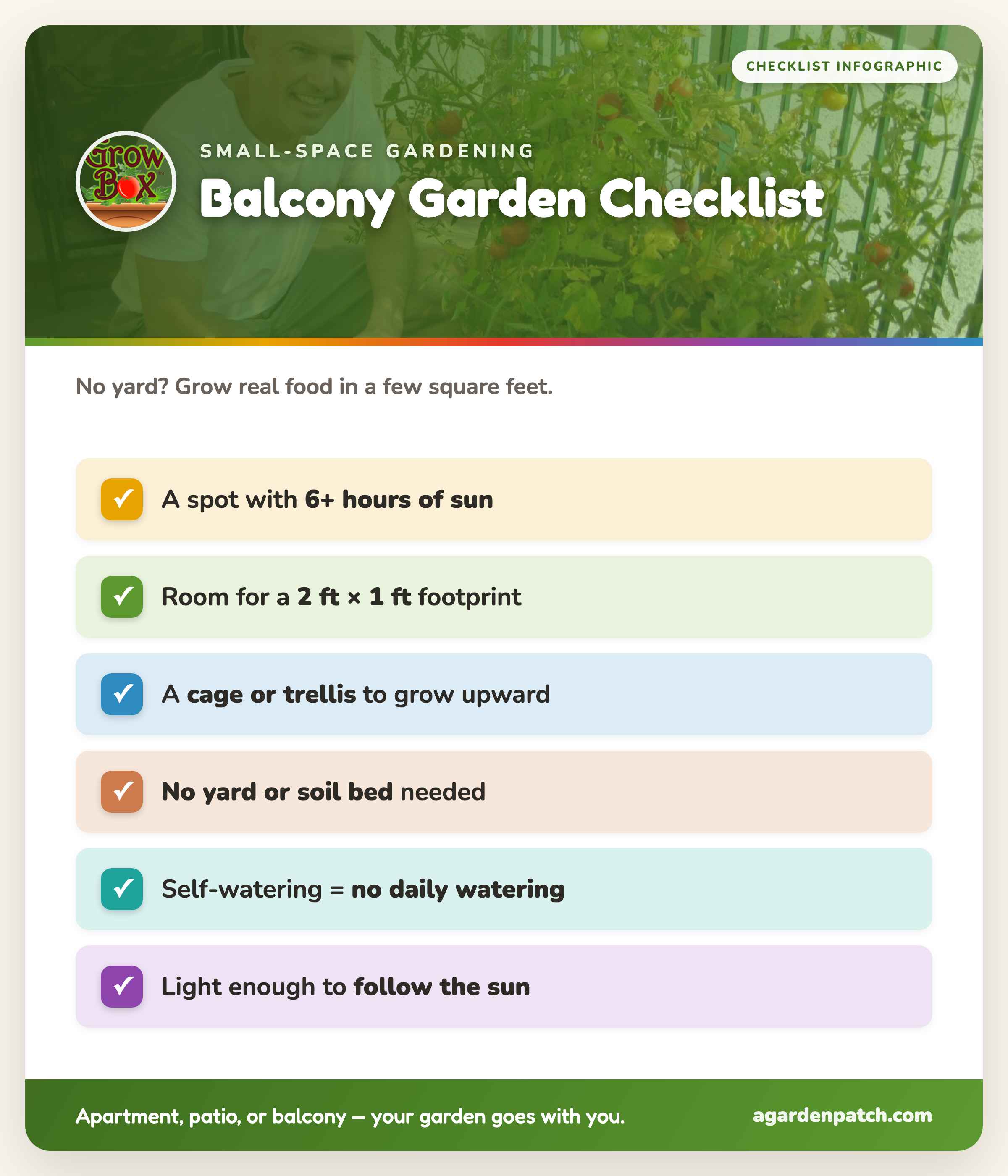
- A spot with 6+ hours of sun. Most vegetables are sun-lovers. Watch your balcony for a day and find the sunniest patch.
- Room for a ~2 ft × 1 ft footprint. That’s all the floor space one productive planter needs.
- A cage or trellis to grow upward. Vertical room is free room — use it.
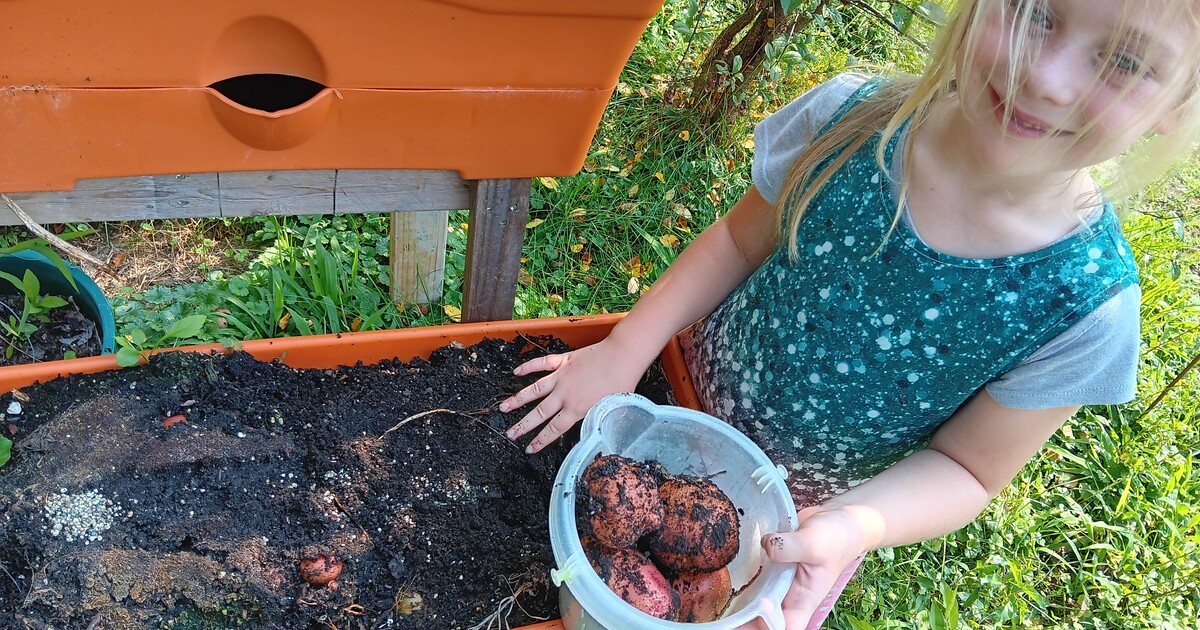
- No yard or soil bed needed. Containers do all the work. Concrete is fine.
- Self-watering so you don’t water daily. A reservoir keeps roots happy even when life gets busy.
- Light enough to move and follow the sun. A portable planter lets you chase the best light all season.
If your space ticks most of these, you’re ready to grow.
Best Crops for Small Spaces and Balconies
The secret to small space container gardening is choosing crops that give you a big harvest from a small footprint. These are the all-stars for beginners growing vegetables on a balcony:
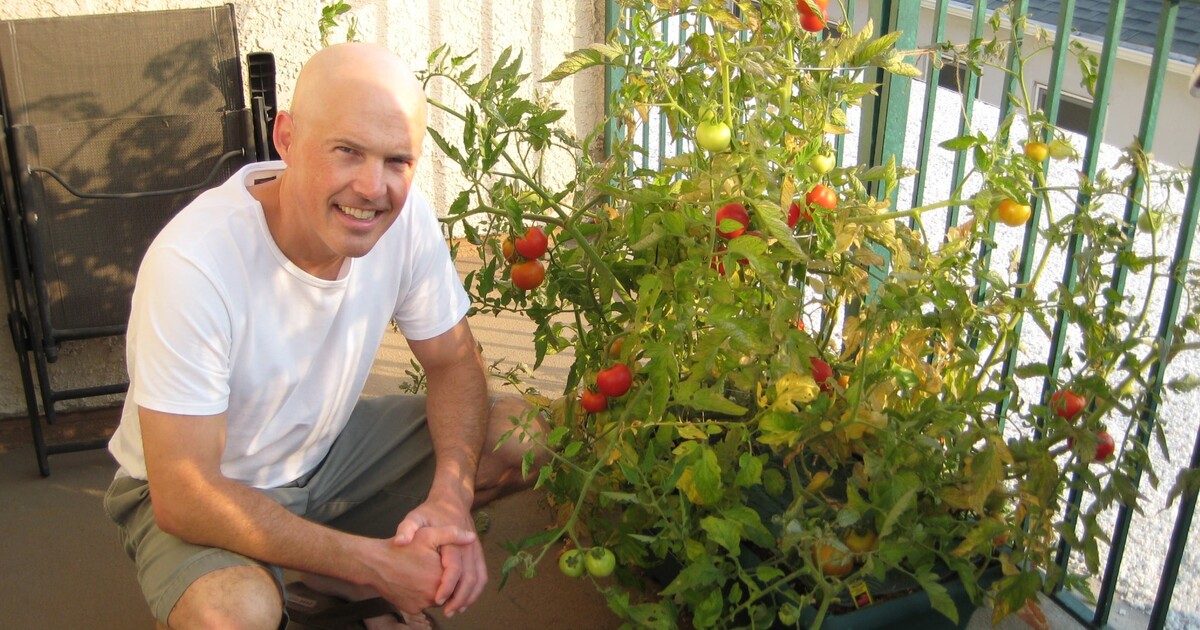
- Cherry tomatoes — Prolific, forgiving, and made for containers. One healthy plant can hand you tomatoes for months.
- Peppers — Compact plants, heavy producers. Bell, jalapeño, banana — they all love a sunny patio.
- Herbs — Basil, parsley, cilantro, mint, and thyme thrive in tight quarters and pay you back every time you cook.
- Lettuce and leafy greens — Fast, easy, and you harvest leaf by leaf. Cut-and-come-again means weeks of salad from one planting.
- Cucumbers on a trellis — Send them climbing and they take up almost no floor space while pumping out fruit.
- Strawberries — Sweet, compact, and perfect tucked along the edges of a planter.
Start with two or three of these. A couple of cherry tomato plants, a row of basil, and some lettuce will give you a steady patio vegetable garden without overwhelming you.
Grow Vertically to Maximize a Tiny Footprint
When you can’t grow out, grow up. This is the single most important trick in balcony vegetable gardening.
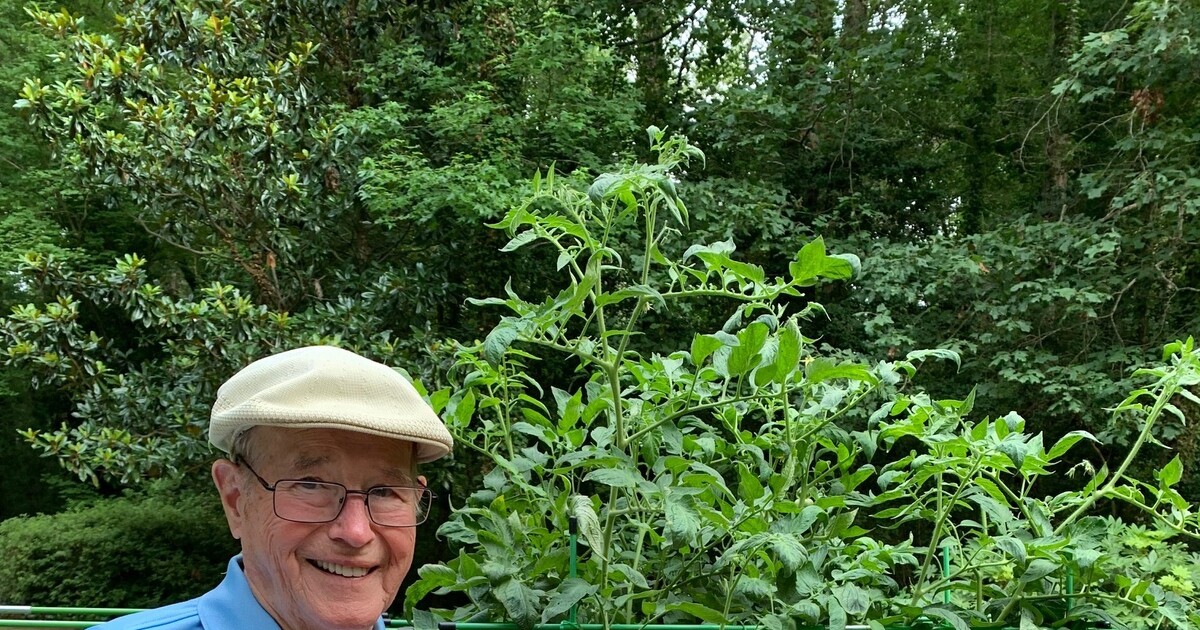
A cage or trellis turns one square of floor into a wall of green. Tomatoes climb. Cucumbers climb. Beans and peas climb. Even some squashes will scramble upward if you train them.
The benefits stack up fast:
- More food per square foot. Vertical plants produce above the footprint, not just inside it.
- Healthier plants. Better airflow means fewer disease and mildew problems.
- Easier harvesting. Fruit hangs at eye level instead of hiding under leaves.
- Cleaner fruit. Tomatoes and cucumbers off the ground stay clean and bug-free.
Add a cage or trellis to your planter on day one, before the plants get big. Then guide the stems upward as they grow. By midseason you’ll have a lush green column instead of a sprawling mess.
Renter-Friendly: Garden Without Permission
Renting? Balcony vegetable gardening was practically built for you.
Container gardening leaves zero permanent marks. There’s no digging, no raised bed bolted to anything, no holes in the patio. You’re not changing the property — you’re just setting a planter on it.
And here’s the best part: when you move, your garden moves too. A portable planter lifts up and rides along to the next apartment. You’re not leaving years of soil-building behind for the next tenant. Your garden is yours.
That portability matters day to day, too. You can shuffle planters out of the way when guests come over, tuck them under cover before a storm, or rearrange your whole balcony in five minutes.
Sun and Wind Tips for Balconies
Balconies have their own little quirks. A couple of small adjustments make a big difference.
Find your sun. Spend a day noticing where the light lands and for how long. South- and west-facing balconies usually get the most. If your sunniest spot shifts through the season, a light, movable planter lets you follow it instead of fighting it.
Watch for reflected heat. Concrete and glass railings can bounce a lot of heat onto plants. In peak summer, that’s great for tomatoes and peppers but rough on lettuce. Move heat-sensitive greens to a shadier corner or behind taller plants.
Tame the wind. Higher floors get gusty, and wind dries plants out fast and can snap tall stems. A solid railing or a windbreak helps. So does keeping climbing plants tied securely to their trellis.
Mind the watering. Wind and sun dry containers quickly, which is exactly why a self-watering container is a balcony gardener’s best friend. With a reservoir doing the work, your plants stay hydrated through hot, breezy days even when you can’t water every morning.
The Easy Way to Start: GrowBox™
Everything on that checklist? The GrowBox™ delivers it in one tidy package.
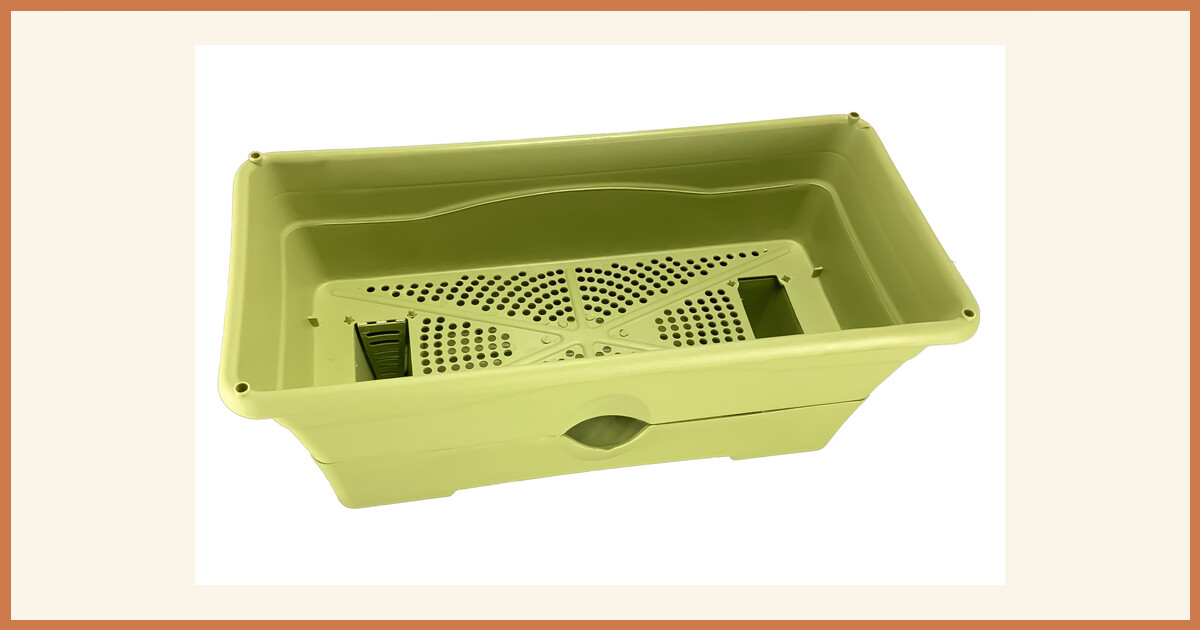
It’s a compact, self-watering planter with a roughly 2 ft × 1 ft footprint — small enough for almost any balcony, patio, or sunny windowsill. The 4-gallon reservoir wicks water straight to the roots, so one fill lasts days. No daily watering, no soggy guesswork.
The Nutrient Patch™ cover feeds your plants and blocks weeds at the same time. Add the cage and you’re growing vertically from day one. And because it’s light and portable, you can follow the sun or take it with you when you move.
No yard. No soil bed. No digging. Just fresh food from your own little corner of the world.
Ready to start your balcony vegetable garden? Grab your GrowBox™ at agardenpatch.com and grow your first harvest this season.
Save This: The Small-Space Checklist